How Ontario and Canada are building tomorrow’s workforce
Across Canada, the nature of work is shifting quickly, and in ways that could reshape entire sectors.
From advanced technology and health care to construction and infrastructure, the demand for skilled workers is evolving alongside the economy itself; and increasingly, Canada (and Ontario in particular), are attempting to respond by preparing people earlier, faster, and more effectively for the roles that will define the future.
A growing opportunity for talent
In Ontario, new projections highlight just how significant that opportunity is.
A recent report found the province will need more than one million university graduates over the next decade to meet labour market demand, particularly in fields like science, technology, engineering and mathematics (STEM) and health sciences.
More than filling jobs, it’s about powering the next phase of economic growth. From artificial intelligence and advanced manufacturing to modern health systems, these sectors are central to Ontario continuing to innovate and compete globally.
What’s encouraging is that the response is already underway.
Post-secondary institutions, supported by government investment, are expanding capacity in high-demand programs, creating more pathways for students to gain the skills that today’s economy requires. The Government of Ontario recently announced that it would add to its existing commitment to create 30,000 more post-secondary seats in “high demand” programs like health care and STEM by an additional 40,000 seats. It’s a coordinated effort that recognizes the reality that the workforce of tomorrow is being trained today.
“Canada has one of the most educated work forces in the world, says Robert Lavigne, OMERS Chief Economist. “Canadian ingenuity has significantly contributed to some of the defining technologies of our generation: 5G, the smartphone and AI. To build a strong economy in a more turbulent world, we must invest in our young people to prepare them for the future, as well as increase retraining and retooling programs to ensure our existing workforce meets the needs of the day. We must treat skilled workers like the scarce resource they are. That means giving people powerful incentives to stay in Canada as well as attract the best and the brightest from around the world. So, in addition to education and training, we need to ensure Canada remains a great place to live freely, raise families, take risks and grow businesses.”
Opening new pathways into the skilled trades
At the national level, a similar momentum is building, but in skilled trades.
Through its latest economic update, the federal government has proposed a $6 billion investment to recruit, train and hire up to 100,000 new skilled trades workers, helping to meet growing demand across housing, infrastructure and major projects.
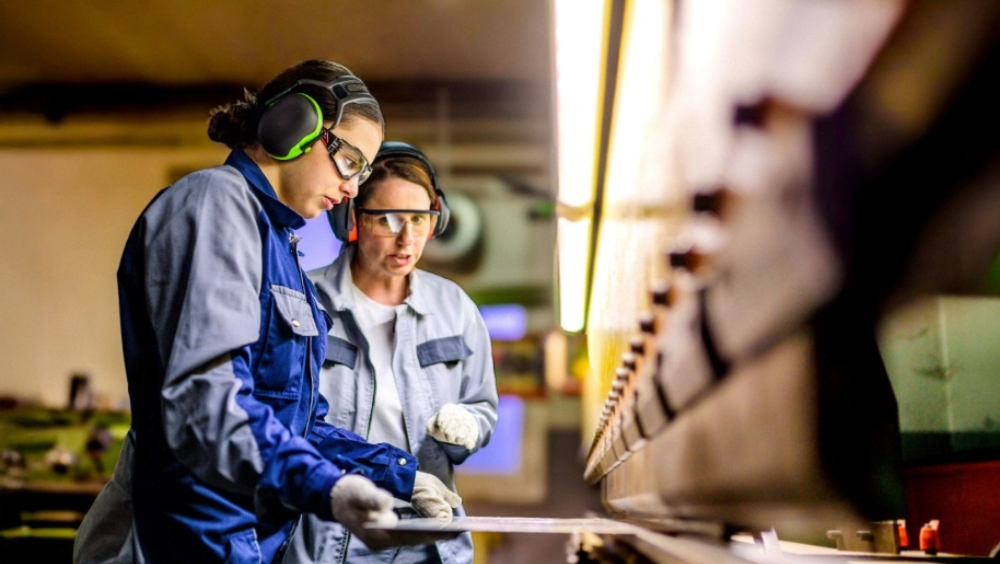
At the centre of this effort is a program designed to make trades careers more accessible, particularly for young Canadians. By offering paid, entry-level work experiences that lead directly to apprenticeships, the initiative creates a clearer on ramp from education into long-term careers.
Additional supports, including wage subsidies for employers and streamlined certification processes, are aimed at making it easier not just to enter the trades, but to succeed in them.
Connecting people to both purpose and possibility
What links these efforts, across universities, training programs and apprenticeships, is a focus on connecting youth to what they need to thrive (and to what both the Ontario and overarching Canadian economy need to enable future success). Specifically, this means:
Connecting students to in-demand careers.
Connecting young people to hands-on experience.
Connecting education more directly with the needs of a changing economy.
As industries evolve, so too do the skills they require. By strengthening the pathways between learning and work, both the province and the country need to make sure people are not just ready for jobs, but ready for the right ones.
Investing in adaptability
Canada’s economy is being shaped by technological change, demographic shifts and new global dynamics. Preparing for that future means building a workforce that is flexible, highly skilled and ready to grow alongside these changes.
Efforts like expanding university enrolment in key fields and modernizing the skilled trades system show ways that governments and institutions are leaning into that challenge. But can more be done?
“Change is the only constant in life, and labour markets demonstrate that greatly,” adds Robert. “While we must invest in matching young people to the careers of the future, we should not forget soft skills that forge adaptability: emotional intelligence, curiosity and openness foster a growth mindset that ensure our young people are happy, healthy and productive workers.”
Whether it’s a student entering a STEM program in Ontario or an apprentice starting out on a job site, these initiatives signal something bigger: a recognition that talent needs to be Canada’s greatest asset, and that investing in people is the most effective way to build long-term resilience.
The landscape of work may be changing, but across the country, one thing is clear: Ontario and Canada aren’t standing still, nor can they afford to in a rapidly evolving environment.
The Relatable Economist is an ongoing written series focused on how the economy, geopolitics, markets and more are impacting our day-to-day lives, discussing topics that matter to you, even if just to share with your friends at your next get-together or in the stands at your child’s or grandchild’s soccer game. Have a topic you want to learn more about? Write to us at therelatableeconomist@omers.com.
Stories we think you'll like
2 min read
Can home care keep Ontario seniors out of hospitals?
4 min read